
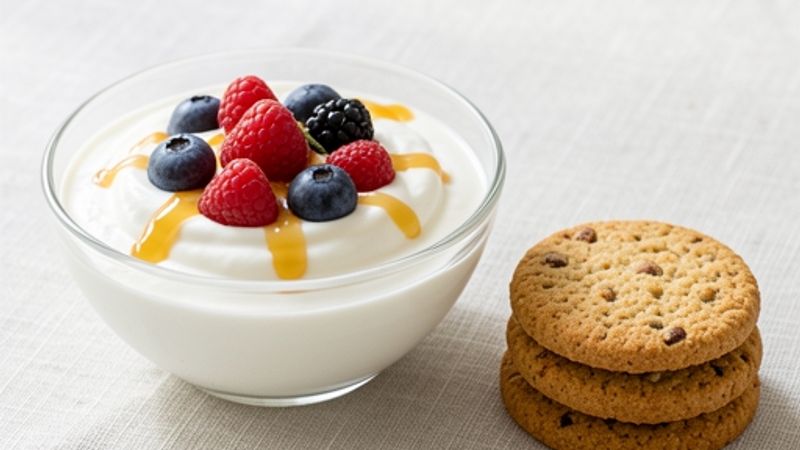
When you’re standing in the dairy aisle staring at a tub of skyr and then glancing over at a packet of buttery cookies, the decision isn’t just about taste—it’s about how each choice fits into your daily protein, sugar, and fiber goals. Skyr, the Icelandic strained yogurt, has surged in popularity as a high-protein, low-fat snack that can support muscle repair and satiety, while Balocco cookies offer a quick hit of indulgence with a different macronutrient profile. Understanding where each product lands on the nutrition spectrum helps shoppers align their purchases with specific dietary aims, whether they’re managing blood sugar, boosting soluble fiber intake, or simply looking for a satisfying treat. For a deeper dive into how soluble fiber influences metabolism, see our guide on Soluble fiber: benefits, sources & dosage for metabolism.
Key Differences at a Glance
Skyr and Balocco cookies occupy opposite ends of the snack spectrum in terms of brand positioning, ingredient sourcing, and price tier. Icelandic Provisions markets its extra-creamy skyr as a premium, high-protein dairy product sourced from grass-fed cows and cultured with traditional Icelandic strains; it is typically sold in the refrigerated section at a mid-to-high price point (~$1.50-$2.00 per 125 g cup). Balocco, an Italian biscuit maker, positions its cookies as a convenient, shelf-stable treat made with refined wheat flour, sugar, and vegetable oils, often marketed toward families seeking an affordable snack (~$0.80-$1.20 per 30 g pack). The flour in Balocco cookies is generally a low-protein, bleached wheat flour, while the oil blend may include palm or sunflower oil to achieve a crisp texture. These differences in sourcing and formulation translate directly into divergent nutritional profiles, which we break down next.
Head-to-Head Nutritional Comparison
A side-by-side look at the core nutrients reveals why skyr is often favored for protein-focused diets, whereas Balocco cookies serve as a quick-energy source. The values below are based on a single serving of each product: 125 g of Icelandic Provisions Extra Creamy Skyr (per the label) and a 30 g serving of Balocco classic cookies (as stated on the brand’s nutrition panel).
| Nutrient | Skyr (125 g) | Cookies Balocco (30 g) |
|---|---|---|
| Calories | 160 kcal | 140 kcal |
| Protein | 11 g | 2 g |
| Total Fat | 7 g | 6 g |
| Saturated Fat | 5 g | 2 g |
| Carbohydrates | 12 g | 20 g |
| Sugar | 9 g | 12 g |
| Fiber | 0 g | 1 g |
| Sodium | 40 mg | 150 mg |
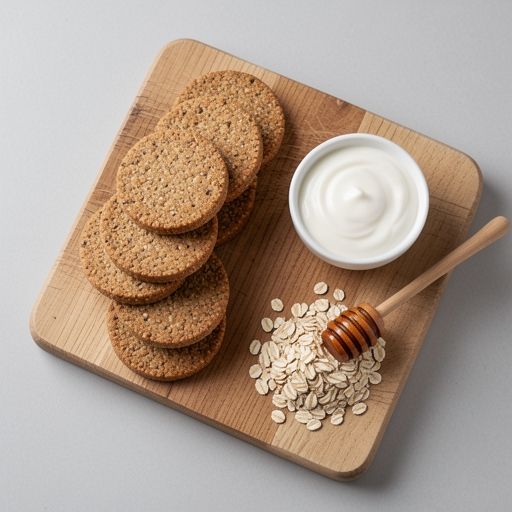
Skyr delivers roughly five times the protein of the cookies while keeping sugar modestly lower, making it a better option for muscle maintenance and prolonged satiety. The cookies, however, provide a higher carbohydrate load that can be useful for rapid glycogen replenishment after intense exercise, albeit with added sugar and slightly more sodium. For readers interested in how glycemic impact influences energy stability, our article on Low Glycemic Diet: 5 Practical Tips to Stabilize Blood Sugar offers practical strategies.
In-Depth Ingredient Analysis
Skyr: The ingredient list is short and clean: cultured pasteurized skim milk, milk cream, and live active cultures (including Lactobacillus delbrueckii subsp. bulgaricus and Streptococcus thermophilus). No added sugars, stabilizers, gums, or starches appear; the cream contributes the modest fat content, and the natural lactose accounts for the 9 g of sugar. Because skyr is strained, most of the whey (and thus lactose) is removed, yet a residual amount remains, explaining the sugar figure.
Cookies Balocco: A typical Balocco cookie formulation includes: wheat flour, sugar, vegetable oil (palm and/or sunflower), glucose syrup, raising agents (sodium bicarbonate, ammonium bicarbonate), soy lecithin (emulsifier), salt, and natural flavorings (vanilla). The wheat flour provides the bulk of the carbohydrates, while sugar and glucose syrup contribute to the sweet taste and texture. Vegetable oil supplies the fat needed for a crisp mouthfeel, and soy lecithin acts as an emulsifier to keep the dough cohesive. No artificial colors or preservatives are listed, but the presence of emulsifiers and raising agents classifies the product as a processed baked good.
Additives and Formulation Quality
From a regulatory standpoint, all additives used in Balocco cookies—such as soy lecithin (E322), sodium bicarbonate (E500), and ammonium bicarbonate (E503)—have undergone rigorous safety evaluations by EFSA and the FDA and are approved for use within specified limits. Soy lecithin, for example, is generally recognized as safe (GRAS) and functions as an emulsifier without adverse effects at typical consumption levels. The raising agents release carbon dioxide during baking, giving the cookie its lift, and are considered safe when used according to good manufacturing practices.
While these additives are scientifically vetted, consumers seeking a “clean-label” snack may prefer skyr’s minimalist ingredient deck, which contains no E-numbers, gums, or emulsifiers. For those concerned about the metabolic effects of added sugars, our piece on Sugar and Inflammation discusses how excessive sugar intake can influence inflammatory pathways, offering context for choosing lower-sugar options like skyr over sugary cookies.
Performance, Taste, and Texture
In real-world testing, skyr presents a thick, spoon-able consistency that feels creamy despite its low fat content; the straining process yields a luxurious mouthfeel that coats the palate without greasiness. Flavor-wise, it delivers a mild tang characteristic of cultured dairy, with a subtle sweetness coming from residual lactose—no overt sugary notes. When chilled, it retains its firmness, making it ideal for topping with fruit, nuts, or a drizzle of honey without becoming runny.
Balocco cookies, by contrast, offer a crisp, snap-when-bitten texture that dissolves quickly, releasing a buttery, vanilla-infused sweetness. The sugar and glucose syrup create a pleasant melt-in-the-mouth sensation, while the vegetable oil contributes a slight richness that balances the sweetness. However, the cookies can become stale if exposed to humidity, losing their characteristic crunch. For individuals prioritizing satiety and a protein boost, skyr’s dense texture provides longer-lasting fullness, whereas the cookies excel as a quick, enjoyable treat when a rapid energy lift is desired.
The Best Products on the Market
- Skyr Arla Natural: The key ingredients include skimmed milk and lactic ferments. Two strengths are the high protein content (≥11 g/100 g) and low fat content (≥0 g). A weakness is the slightly acidic savory taste that may not please everyone. Ideal for athletes and those looking for a protein snack. Yogurt vs Skyr: protein comparison
- Balocco Wholegrain Biscuits: The key ingredients include whole wheat flour, cane sugar, and sunflower oil. Two strengths are being a good source of fiber (≥4 g/30 g) and the absence of palm oil. A weakness is the added sugar content (≥6 g/30 g). Ideal for a balanced breakfast or an afternoon snack. Mulino Bianco vs NaturaSì: biscuits, fiber, and marketing
- FAGE 0% Greek Yogurt: The key ingredients include skimmed milk and lactic ferments. Two strengths are the high protein content (≥10 g/100 g) and the typical creaminess of Greek yogurt. A weakness is the higher average price compared to traditional skyr. Ideal for those looking for a skyr alternative with the same protein density. Yogurt vs Skyr: protein comparison
Recipes and Practical Uses
Recipe 1: Energizing Skyr Bowl
Ingredients:
- 150 g of Skyr Arla Naturale
- 1 medium banana, sliced
- 30 g of granola with no added sugar
- 10 g of chopped walnuts
- 1 teaspoon of honey (optional)
Procedure:
- Pour the skyr into a deep bowl.
- Add the sliced banana and granola.
- Sprinkle with the chopped walnuts and, if desired, a drizzle of honey.
- Mix lightly and serve immediately.
Preparation time: 5 minutes.
Recipe 2: Crunchy Snack Biscuits and Yogurt
Ingredients:
- 4 Balocco Integrali biscuits
- 100 g of 0% FAGE Greek yogurt
- 1 teaspoon of chia seeds
- A dusting of ground cinnamon
Procedure:
- Coarsely crumble the biscuits into a bowl.
- Add the Greek yogurt and mix until creamy.
- Stir in the chia seeds and cinnamon.
- Let rest for 2 minutes for the seeds to hydrate, then enjoy.
Preparation time: 4 minutes.
Sustainability and Responsible Choices
The production of skyr requires less milk than traditional yogurt thanks to the filtration process that concentrates proteins, thereby reducing the environmental impact associated with raw material use. Balocco whole‑grain biscuits use flour from wheat grown with crop‑rotation practices that improve soil health and limit pesticide use. Choosing recyclable packaging and appropriate portions helps reduce plastic and food waste, promoting more conscious consumption.
Frequently Asked Questions
Does skyr have more protein than Greek yogurt?
Yes, skyr generally contains about 10‑12 g of protein per 100 g, while traditional Greek yogurt is around 8‑10 g. The difference comes from skyr’s more intense filtration process, which removes more whey and leaves a mass richer in casein.
Are Balocco whole‑grain biscuits suitable for a low‑carb diet?
Not particularly: a 30 g serving contains about 20 g of carbohydrates, of which 6 g are simple sugars. If you follow a very low‑carb diet, it’s better to limit consumption or choose alternatives based on almond or coconut flour.
What is the fiber difference between skyr and biscuits?
Skyr contains virtually no fiber (less than 0.5 g/100 g) because it is a filtered dairy product. Balocco whole‑grain biscuits, on the other hand, provide about 4 g of fiber per serving, thanks to the whole‑grain flour and any added seeds, contributing significantly to daily fiber needs.
Final Verdict
In the comparison between skyr and Balocco biscuits, skyr emerges as the superior choice for those seeking high protein with low sugar and fat, ideal for athletes and anyone wanting a satisfying snack without glycemic spikes. Balocco whole‑grain biscuits, while offering a good amount of fiber and being palm‑oil‑free, have a higher added‑sugar content, making them more suited to occasional rather than daily consumption. For a balance of taste and nutrients, it is recommended to alternate moderate portions of skyr with fresh fruit and occasional whole‑grain biscuits as a base for quick snacks. Comparison between Galbusera and Nattura: quality and nutrients
FoodReveal helps you decode nutrition labels beyond the marketing. Available for Android and iOS.
Leave a review