

Knowing how to read food labels correctly is a fundamental skill for making informed choices at the grocery store. Often printed in small text and filled with technical terms, labels can seem like an insurmountable obstacle. However, with a few simple tips, anyone can learn to decipher them to protect their health and that of their family
This guide, based on U.S. Food and Drug Administration (FDA) standards, will walk you through interpreting each section of the label, turning you into a more mindful and informed consumer
Why Is It Important to Read Food Labels?
Reading labels isn't just about counting calories. It's an act of self-care that allows you to
- Make healthier choices by identifying products with too many added sugars saturated fats, or sodium
- Manage allergies and intolerances by quickly spotting the presence of major allergens like wheat, soy, or tree nuts
- Avoid unwanted ingredients by recognizing additives, preservatives, or confusing terms like 'high-fructose corn syrup' and artificial colors such as 'Red 40'
- Assess a product's true quality by not being fooled by marketing slogans and learning to judge food by its actual composition
The Key Elements of a Food Label
According to FDA regulations, every food label must include a series of mandatory pieces of information. Let's look at the most important ones together
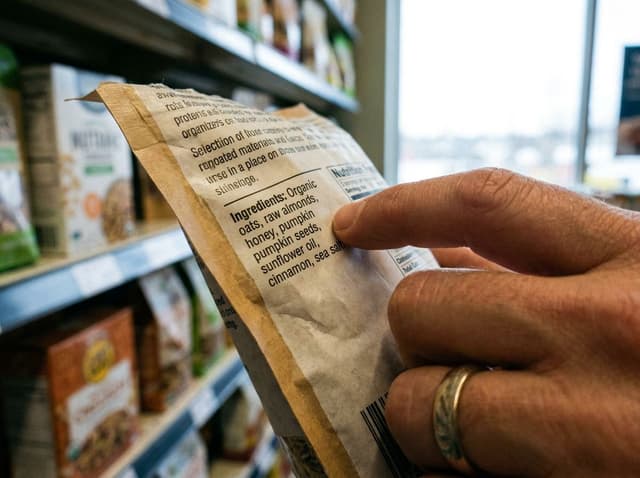
The Ingredient List
This is perhaps the most crucial section. Ingredients are listed in descending order by weight the first ingredient on the list is the most prominent one in the product
- Pro Tip If sugar, syrups, or low-quality fats are among the first few ingredients, it's a sign to consider healthier alternatives
The Nutrition Facts Panel
The Nutrition Facts panel provides a detailed breakdown of the energy values and nutrients in the product. A common point of confusion for American consumers is understanding the serving information
- Serving Size this indicates the amount people typically eat or drink. It is not a recommendation of how much you should eat
- Servings Per Container this shows the total number of servings in the entire package
The main items on the panel are
- Calories a measure of how much energy you get from a serving of this food
- Total Fat with a breakdown of Saturated Fat and Trans Fat which should be limited
- Total Carbohydrate with a breakdown of Dietary Fiber and Total Sugars which includes Added Sugars
- Protein essential for your body
- Sodium excessive consumption is harmful to cardiovascular health
- % Daily Value (%DV) shows how much a nutrient in a serving of food contributes to a total daily diet. 5% DV or less of a nutrient per serving is considered low, while 20% DV or more is considered high
Allergens
The Food Allergen Labeling and Consumer Protection Act of 2004 (FALCPA) mandates that the nine major food allergens be clearly identified. These are milk, eggs, fish, crustacean shellfish, tree nuts, peanuts, wheat, soybeans, and sesame. They must be declared in one of two ways
- In parentheses following the name of the ingredient
- Example: "flour (wheat), whey (milk)"
- In a separate "Contains" statement immediately after or next to the ingredient list
- Example: "Contains Wheat and Milk."
Date Labeling and Storage Instructions
It's essential to distinguish between different date labels, which are related to quality, not safety
- "Best if Used By/Before" indicates when a product will be of best flavor or quality. It is not a purchase or safety date
- "Use-By" the last date recommended for the use of the product while at peak quality. It is not a safety date except when used on infant formula
Country of Origin
For some foods, such as produce, meat, fish, and certain nuts, the U.S. Department of Agriculture (USDA) requires a Country of Origin Labeling (COOL) statement to inform consumers about the source of their food
Practical Tips for Grocery Shopping
- Don't Be Fooled by Marketing Claims words like "natural," "multigrain," or "light" don't always mean a product is healthy. Always check the ingredient list and the Nutrition Facts panel
- Compare Similar Products when you're undecided between two products, use the labels to compare their nutritional values and choose the best option for you
- Plan Your Shopping going to the store with a list helps you avoid impulse buys based solely on a package's appearance. A good meal plan can be a great help
Frequently Asked Questions (FAQ)
Q: What does "no added sugar" mean?
A It means that no sugar or sugar-containing ingredients like syrups were added during processing. However, the product may still contain naturally occurring sugars (like fructose in fruit). Check the "Added Sugars" line on the Nutrition Facts panel for clarity
Q: Are allergens always listed in bold?
A FDA regulations require allergens to be clearly identified, but they don't have to be in bold. They must be listed in the ingredient list or in a separate "Contains" statement, making them easy to spot
Q: How do I calculate the calories for the whole package?
A Look at the "Servings Per Container" and the "Calories" per serving. Multiply the number of calories by the number of servings. For example, if a package has 3 servings and each serving is 150 calories, the entire package contains 450 calories (150 x 3)
Q: Is the ingredient list always accurate?
A Yes, manufacturers are legally required by the FDA to list all ingredients in order by weight. Health authority inspections ensure these regulations are followed. However, be mindful of "may contain" statements, which alert consumers to possible cross-contamination
🔍 FoodReveal helps you decode nutrition labels beyond marketing. Available for Android and iOS.
Sources
- U.S. Food and Drug Administration (FDA) - How to Understand and Use the Nutrition Facts Label
- U.S. Department of Agriculture (USDA) - Food Labeling
- National Institutes of Health (NIH) - Dietary Supplement Label Database