
Introduction
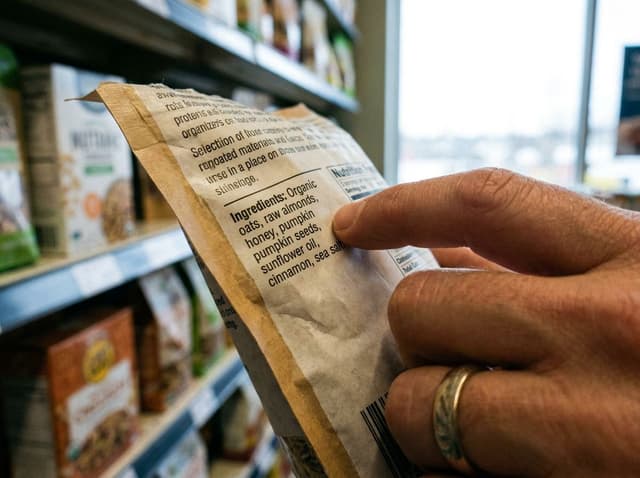
Navigating the aisles of baby food can feel like decoding a secret language From “organic” to “no added sugar,” the buzzwords on a jar or pouch are meant to reassure, but they can also mask hidden ingredients, excess sodium, or even trace contaminants. This 1,500‑word guide walks you through the most important sections of a baby‑food label, highlights red flags, and gives you a cheat‑sheet you can use in the checkout line
Why Baby‑Food Labels Matter
Babies have tiny, developing bodies and rapidly changing nutritional needs. While breast‑milk or formula provides the bulk of calories in the first six months, solid foods become essential after that. A single serving of pureed carrots can supply a baby’s daily vitamin A requirement, but a mislabeled product could also deliver unwanted sugars, sodium, or even trace heavy metals. Understanding the label empowers you to
- Ensure nutrient adequacy– Confirm that the food supplies the vitamins and minerals your child needs
- Avoid hidden sugars and sodium– Excess added sugars can set a lifelong preference for sweet foods; too much sodium strains immature kidneys
- Spot potential allergens– Early exposure to allergens is a nuanced topic, and clear labeling helps you make informed decisions
- Guard against contaminants– Recent studies have flagged lead, arsenic, and cadmium in some grain‑based baby foods; reputable brands will disclose testing results
“Reading the label is the first line of defense for a safe, balanced diet.”– Pediatric nutritionist Dr. Maya Patel
The Anatomy of a Baby‑Food Label
Below is a quick‑reference map of the five key sections you’ll encounter on most U.S. baby‑food packages
| Section | What to Look For | Quick Tips |
|---|---|---|
| 1. Front‑of‑Pack Claims | “Organic,” “No Added Sugar,” “Whole‑grain,” “Non‑GMO.” | Verify the claim on the back; front‑pack marketing can be misleading. |
| 2. Nutrition Facts Panel | Serving size, calories, total fat, sodium, total/added sugars, iron, calcium, vitamin D. | Prioritize low sodium (< 40 mg per serving) and low added sugars (< 2 g). |
| 3. Ingredient List | Ingredients listed in descending order by weight. | First three ingredients should be recognizable whole foods (e.g., carrots, apples). |
| 4. Allergen & PAL Statements | “May contain peanuts,” “Processed in a facility that also handles wheat.” | Use these to assess cross‑contamination risk if your child has known allergies. |
| 5. Certification & Testing Logos | USDA Organic seal, Clean Label Project (CLP) certification, third‑party heavy‑metal testing. | Look for reputable third‑party symbols; they often indicate stricter quality control. |
Front‑of‑Pack Claims: Decoding the Buzzwords
| Claim | Meaning (per FDA & USDA) | What It Doesn’t Guarantee |
|---|---|---|
| Organic | Grown without synthetic pesticides or GMOs; processed without artificial preservatives. | May still contain natural sugars or added fruit juice concentrates. |
| No Added Sugar | No sucrose, high‑fructose corn syrup, or other sweeteners added during processing. | Natural sugars from fruit or milk still count toward total sugar. |
| Whole‑grain | At least 50 % of the grain ingredient is whole grain. | May still contain refined flour or added salt. |
| Non‑GMO | Ingredients are not genetically engineered. | Does not address pesticide residues or heavy‑metal contamination. |
Takeaway Treat front‑pack claims as a starting point, not a guarantee of nutritional perfection
Nutrition Facts Panel: The Numbers Game
Serving Size & Calories
Baby‑food servings are usually 2–4 oz (≈ 60–120 ml). A typical 3‑oz (≈ 90 ml) fruit puree contains 30–45 kcal, while a protein‑rich puree (e.g., chicken & sweet potato) may provide 50–70 kcal. Keep an eye on calorie density; overly calorie‑dense foods can crowd out other essential nutrients
Total Fat & Saturated Fat
Infants need dietary fat for brain development. Look for healthy fats (e.g., avocado, olive oil) and minimal saturated fat (< 1 g per serving). Trans‑fat should be absent
Sodium
The American Academy of Pediatrics recommends< 40 mg of sodium per serving for babies under 12 months. Many commercial purees exceed this limit by adding preservatives or seasoning. Choose “low‑sodium” or “no‑salt added” options whenever possible
Sugars: Total vs. Added
The FDA now requires a separate line for Added Sugars on the Nutrition Facts panel. However natural sugars from fruit, dairy, or vegetable sources still appear under “Total Sugars.”
- Natural sugars are acceptable in moderation (e.g., a single‑fruit puree)
- Added sugars (including fruit juice concentrates) should be≤ 2 g per serving for babies
💡 Quick Rule If the “Added Sugars” line reads “0 g,” you still need to check the ingredient list for fruit‑juice concentrates, which the FDA counts as a natural sugar but can still spike the overall sugar load
Micronutrients: Iron, Calcium, Vitamin D
- Iron Critical for cognitive development. Look for≥ 1 mg per serving in meat‑based purees or fortified cereals
- Calcium Important for bone growth. Aim for≥ 30 mg per serving
- Vitamin D Supports calcium absorption; many infant formulas are fortified, but solid foods often lack it. Look for≥ 2 µg (80 IU) per serving if the product claims “Vitamin D‑enhanced.”
Ingredient List: The Truth Behind the Taste
The ingredient list is ordered by weight, from most to least. Here’s how to interpret it
- First three ingredients should be whole foods you recognize (e.g., “sweet potato, carrots, water”). If you see “sugar,” “high‑fructose corn syrup,” or “fruit juice concentrate” among the top three, the product is likely high in added sugars
- Look for hidden salts“Sea salt,” “sodium bicarbonate,” or “sodium benzoate” are all sources of sodium
- Identify thickening agents Common thickeners like “xanthan gum” or “guar gum” are generally safe, but if a product relies heavily on them, it may be less nutrient‑dense
- Allergen flags Even if a label says “no peanuts,” a PAL statement like “may contain traces of peanuts” is a red flag for allergic children
Example Ingredient Breakdown
Organic Sweet Potato & Apple Puree
- Sweet potatoes
- Apple puree (apple juice concentrate)
- Water
- Vitamin C (ascorbic acid) – antioxidant
- Organic cinnamon
Interpretation The second ingredient is a juice concentrate which counts toward total sugars and may be considered an “added sugar” under FDA rules. The product is still a good source of vitamin A, but the sugar content is higher than a plain sweet‑potato puree
Allergen & PAL Statements: Navigating Cross‑Contamination
The U.S. Food Allergy Labeling and Consumer Protection Act (FALCPA) mandates that the top eight allergens (milk, eggs, fish, crustacean shellfish, tree nuts, peanuts, wheat, soy) be declared clearly if present. However, many manufacturers also add Precautionary Allergen Labels (PAL) such as
- “May contain traces of peanut”
- “Processed in a facility that also handles wheat”
What to do If your child has a diagnosed allergy, avoid any product with a PAL for that allergen, as cross‑contact can trigger reactions. For families without known allergies, PALs are still useful cues about a brand’s manufacturing practices
Certifications & Third‑Party Testing: The Extra Layer of Safety
| Certification | Who Issues It | What It Signifies |
|---|---|---|
| USDA Organic | United States Department of Agriculture | No synthetic pesticides, GMOs, or artificial preservatives. |
| Clean Label Project (CLP) Certified | Independent non‑profit testing organization | Products tested for heavy metals, pesticides, and other contaminants; must meet stringent limits. |
| Non‑GMO Project Verified | Non‑GMO Project | Guarantees no genetically engineered ingredients. |
| FDA Food Safety Modernization Act (FSMA) compliant | FDA | Indicates the manufacturer follows current Good Manufacturing Practices (cGMP). |
When a jar displays the CLP seal you can be reasonably confident that it has been screened for lead, arsenic, cadmium, and mercury—heavy metals that have been detected in some grain‑based baby foods
Quick‑Reference Cheat Sheet (Print‑Friendly)
🍼 BABY FOOD LABEL CHEAT SHEET
1️⃣ Front‑Pack Claims
- Verify on back; watch for “no added sugar” vs. natural fruit juice
2️⃣ Nutrition Facts
- ≤ 40 mg sodium per serving
- ≤ 2 g added sugars per serving
- ≥ 1 mg iron, ≥ 30 mg calcium, ≥ 2 µg vitamin D
3️⃣ Ingredient List
- First 3 = recognizable whole foods
- Spot hidden sugars: juice concentrate, honey, agave
- Spot hidden salts: sodium benzoate, sea salt
4️⃣ Allergen/PAL
- Avoid any PAL for known allergens
5️⃣ Certifications
- Look for USDA Organic, CLP, Non‑GMO Project
Print this sheet and keep it on your fridge for a quick label check at the grocery store
Frequently Asked Questions (FAQ)
Q1: Are fruit‑juice concentrates considered “added sugars”?
- A Yes. The FDA classifies juice concentrates as added sugars when they are used to sweeten a product, even though they derive from fruit. Look for “fruit juice concentrate” in the ingredient list and check the “Added Sugars” line
Q2: How much sodium is safe for a 9‑month‑old?
- A The AAP recommends< 40 mg per serving Many commercial purees exceed this; opt for “no‑salt added” or make your own purees at home
Q3: Should I avoid all foods with a PAL statement?
- A If your child has a diagnosed allergy to the listed allergen, absolutely avoid it. For non‑allergic children, PALs can still indicate a higher risk of cross‑contamination, so you may prefer brands with stricter allergen controls
Q4: What is the best way to verify a product’s heavy‑metal testing?
- A Look for the Clean Label Project seal or check the brand’s website for a PDF of third‑party lab results. Some brands also publish a “Safety & Testing” page with batch‑specific data
Q5: Can I trust “No Added Sugar” if the product contains fruit puree?
- A Yes, as long as the fruit puree is listed as a whole fruit (e.g., “apple puree”). However, if the label says “apple juice concentrate,” that counts as added sugar
Putting It All Together: A Real‑World Example
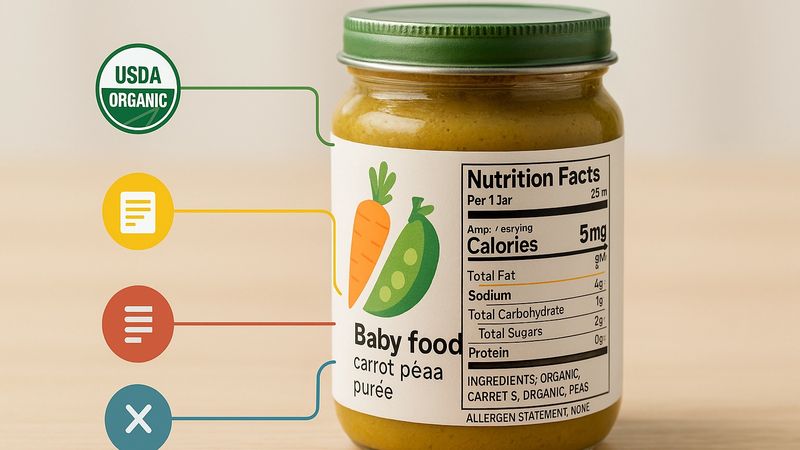
Let’s walk through a typical jar of“Organic Carrot & Pea Puree”from a well‑known brand
| Label Section | What We See | Verdict |
|---|---|---|
| Front‑Pack | “Organic, No Added Sugar, No Salt Added” | Good claims, but verify on back. |
| Nutrition Facts | 3 oz serving, 35 kcal, 0 g total fat, 25 mg sodium, 4 g total sugars, 0 g added sugars, 0.6 mg iron | Sodium is within limits; added sugars are zero. |
| Ingredient List | 1) Carrots, 2) Peas, 3) Water, 4) Vitamin C (ascorbic acid) | First three are whole vegetables – excellent. |
| Allergen Statement | “May contain traces of wheat” (PAL) | No issue unless child has wheat allergy. |
| Certifications | USDA Organic seal, CLP Certified | Indicates rigorous testing for contaminants. |
Conclusion This product checks all the boxes for a low‑sodium, low‑sugar, nutrient‑dense option
Final Thoughts
Reading baby‑food labels is a skill that improves with practice. By focusing on the Nutrition Facts panel ingredient hierarchy and certification logos you can swiftly separate wholesome options from those that rely on hidden sugars, excess sodium, or questionable processing practices. Remember, the best nutrition often comes from fresh, home‑prepared foods but when you need the convenience of a jar or pouch, this guide will keep you a step ahead
“A well‑informed parent is a baby’s first line of defense against nutritional pitfalls.”– Dr. Maya Patel
🔍 FoodReveal helps you decode nutrition labels beyond marketing. Available for Android and iOS.